
Tulisan ini belum tersedia dalam Bahasa Indonesia. Anda sedang membaca versi aslinya dalam bahasa Inggris.
DARVO in the #KawalIbam Campaign: How Deny, Attack, Reverse Victim and Offender Shows Up in Ibrahim Arief's Defence
An analysis of the public rhetoric around the #KawalIbam campaign of Ibrahim Arief ("Ibam"), read through the DARVO pattern: Deny, Attack, Reverse Victim and Offender. It describes what the record shows. It is not a verdict and not a claim about anyone's inner intent.
RAHMAT WIBOWO | 23 OCTOBER 2026
What DARVO means, and why it matters here
DARVO stands for Deny, Attack, Reverse Victim and Offender. It is a documented rhetorical and psychological pattern, not a classic syllogistic fallacy like "appeal to authority" or "post hoc". Even so, it works as an argumentative move: it replaces engagement with the actual charge by emotional framing.
In my wider audit of the #KawalIbam campaign, DARVO is one of ten recurring patterns. This post isolates it, because it is the pattern that ties the others together. It appears in Exhibits D, G and I of the source record.
Background in brief
Between September and November 2023, Ibrahim Arief ("Ibam"), then a technology executive at a state-owned edtech subsidiary and later a defendant in the Chromebook laptop procurement corruption case, ran a public self-defence campaign under the hashtag #KawalIbam. In my report I am a private individual who never had an employment, reporting or performance-review relationship with him, and I became the subject of public comment from him and his circle from around September 2023. That makes this a one-sided view, and I say so plainly.
The DARVO sequence in the record
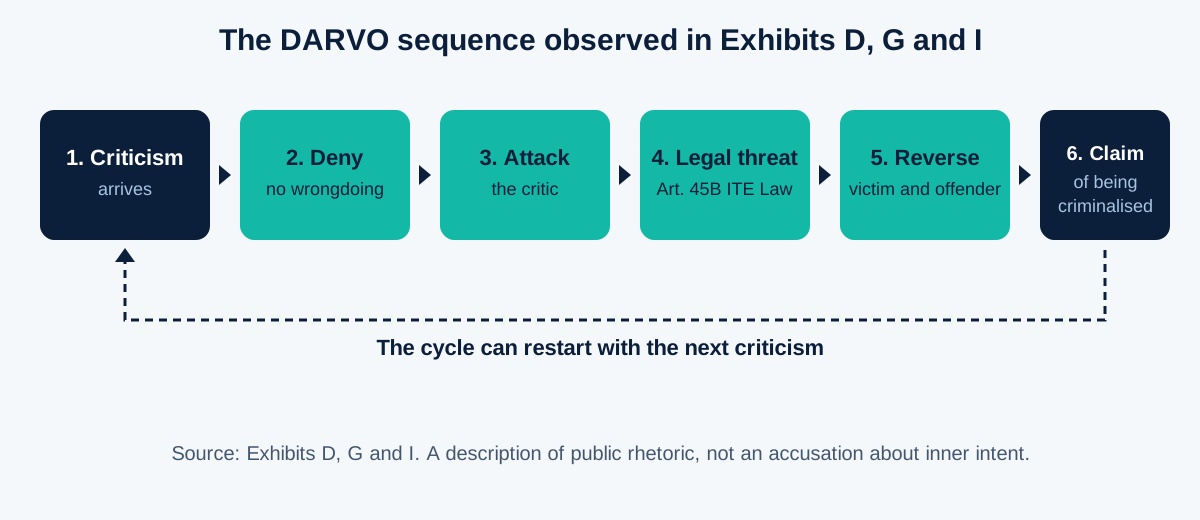
The record shows the following order of moves. I describe observable rhetoric only.
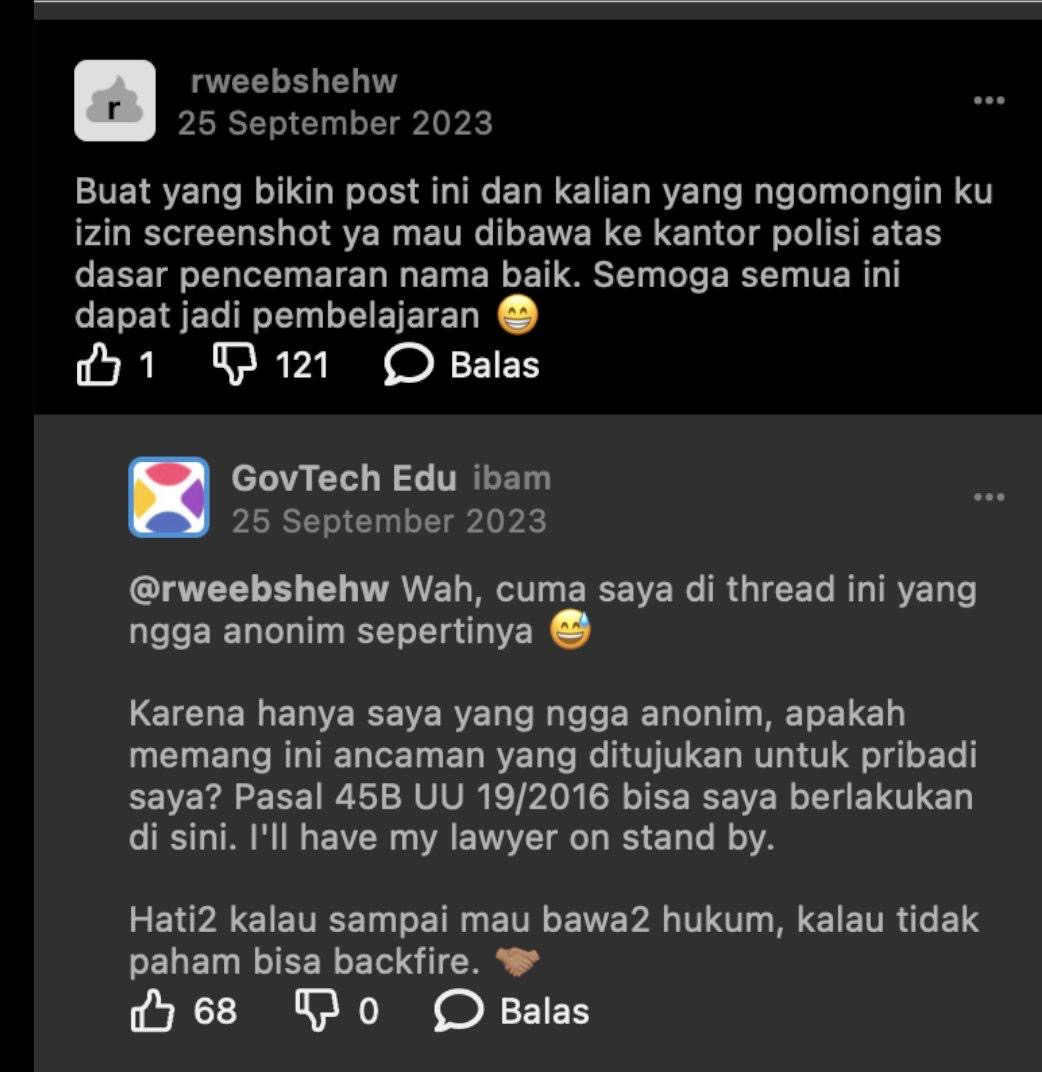
1. Attack: Exhibit D, the legal threat
In Exhibit D, replying to a critic, Ibam wrote (translated from Indonesian): "Because I am the only one who is not anonymous, is this a threat aimed at me personally? I can apply Article 45B of Law 19/2016 here. I'll have my lawyer on standby. Be careful about bringing the law into this, if you don't understand it can backfire."
My reading is that this is an argumentum ad baculum, an appeal to threat. Instead of rebutting the substance of the criticism, the reply substitutes a threat of legal consequences. It also carries a false equivalence: it treats public criticism of conduct in a public dispute as legal defamation, without addressing the truth defence that Indonesian defamation law recognises when the underlying claim is true.
A threat of legal action is not a rebuttal. It changes the risk of speaking, not the truth of what was said. The closing line, "it can backfire", is a specific claim that, as the consequences section of my report shows, did land, but on the speaker rather than the critics.
2. Attack, escalated: Exhibit G, the "deadman's switch"
Exhibit G records the statement (translated): "I will spread anything, even if it is a state secret."
By Ibam's own description, the material threatened is protected state secret information (Law No. 14/2008), so leaking it would itself be a new criminal act. That makes the threat self-defeating. It is also coercion: it threatens to raise the cost to a third party, the state, if personal criticism continues. The counter-argument on the source poster lands on exactly this point: "If the goal is justice, show the facts, not drama."
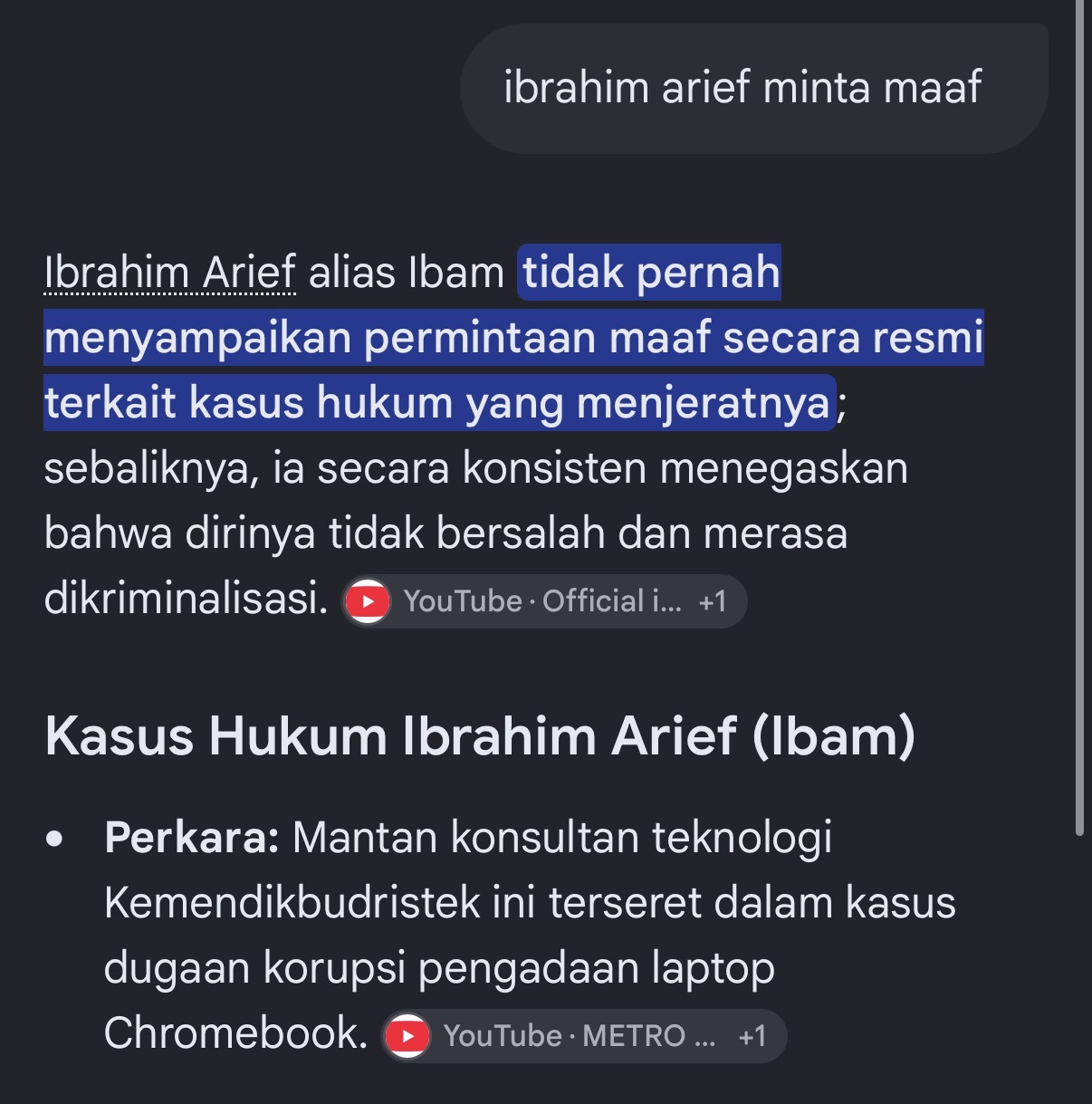
3. Deny and reverse: Exhibit I, no apology and a claim of being criminalised
Exhibit I is an independent search summary stating that Ibam "has never formally apologised regarding the legal case that ensnares him... consistently insists he is not guilty and feels criminalised."
Combined with Exhibits D and G, the pattern reads: deny the wrongdoing, attack the critic with legal threats, and reframe the person facing legal proceedings as the one who is wronged. This is where the victim and offender roles are reversed.
What the pattern replaces
The taxonomy in my report lists the DARVO framing against Exhibits D, G and I, with the function "reframing the party facing legal proceedings as the one being wronged". It sits next to a related non-sequitur: refusing to open facts that are in fact public, namely the court record, while claiming to be criminalised, and without explaining why the cheaper and more conclusive evidence is being withheld.
None of the ten patterns in the campaign involved that one kind of evidence, the public court record. The consistent substitute, in my reading, was a signal of authority, a threat, or a reframing.
The consequences, stated carefully
Two points from the chronology matter for DARVO.
- The legal threat in Exhibit D ("it can backfire") is cited in the source record as a basis for a formal complaint to the KPK and Bareskrim, with Ibam's own statement used as supporting evidence. A threat meant to silence documentation became the documentation.
- Ibam separately became a defendant in the Chromebook case, which is unrelated to the dispute with me. It was not caused by any of the rhetoric above. The source material treats it as retroactive confirmation of a "playing victim" pattern, and I flag that as the framing of that material, not an independent judgement of this analysis.
What a logically valid defence would look like
For the rhetoric discussed here, the report's alternative is simple:
- Answer the claim, not the messenger. Threatening action under Article 45B changes the risk of speaking, not the truth of what was said.
- Open the facts that are already permitted to be opened: court documents, the chronology and public evidence, instead of a "deadman's switch" gesture toward material that is itself protected by law.
Read the full analysis
This post covers one pattern. For the full audit of every exhibit and all ten fallacy types, read the complete Kawal Ibam fallacy audit. For the related claim at the centre of the campaign, see the analysis of the Never Hire List and its logical flaws.
Limits and right of reply
This is an independent analysis of rhetoric and my personal opinion, not a court ruling, an official law-enforcement document or professional legal advice. The presumption of innocence applies in full. Allegations in the personal dispute are allegations that were submitted, not judgements that were handed down. The Chromebook case has been through court proceedings and wide press coverage, but it may still change if further legal remedies such as cassation or judicial review are pursued.
The DARVO description concerns observed rhetoric, not inner intent. I wrote this as the party who is the subject of the statements analysed, so my viewpoint is not neutral, and readers should weigh it critically. Ibrahim Arief and anyone quoted here have the right of reply, and I will publish a substantive response in good faith.